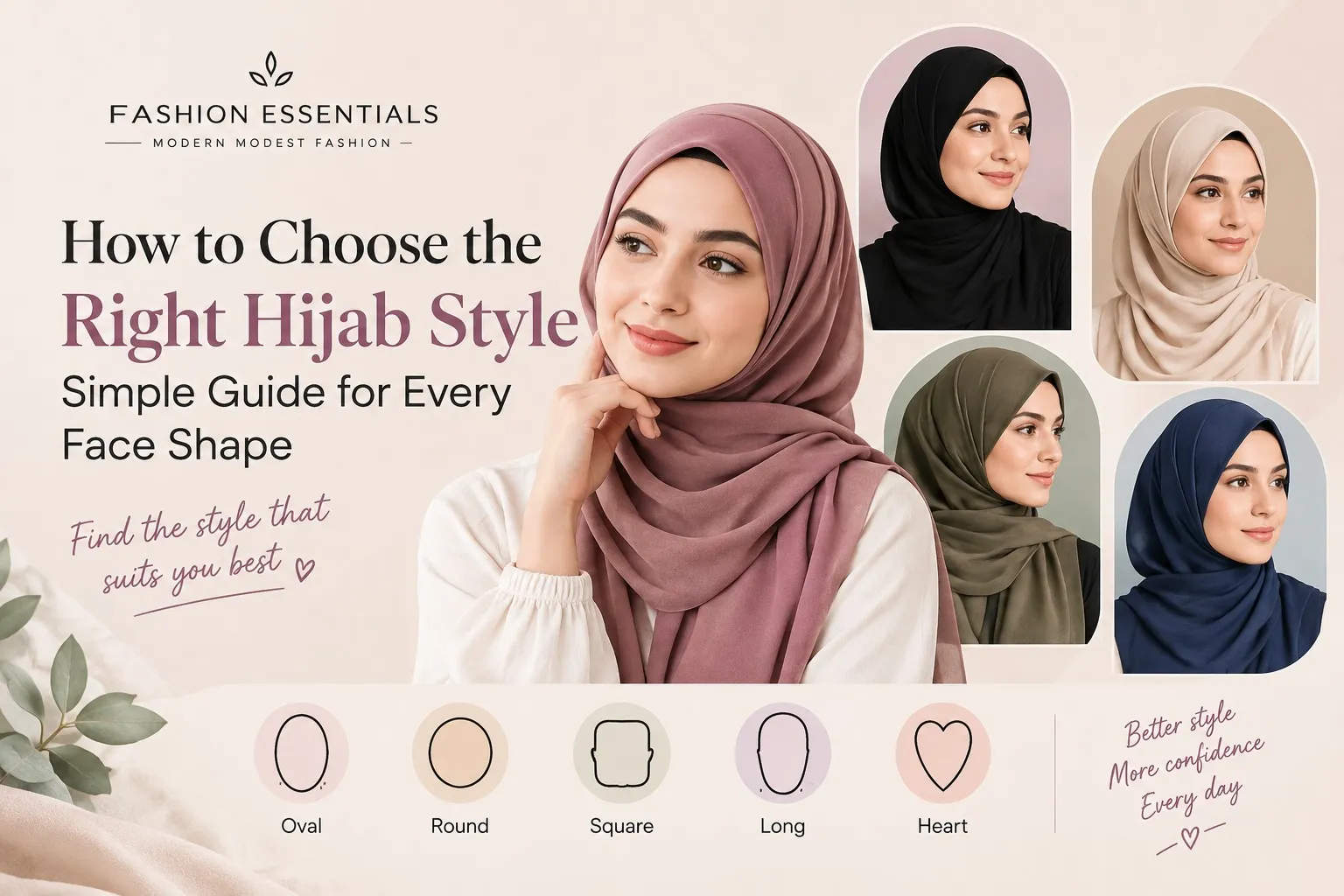
How to Choose the Right Hijab Style: Simple Guide for Every Face Shape
Choosing the right hijab style can make a big difference in how comfortable and confident you feel throughout the day. With so many different hijab styles, fabrics, and wrapping techniques available, it can sometimes be difficult to know which style is right for you.
The good news is that there is no single “perfect” hijab style for a particular face shape. Your personal preference, the fabric you choose, the amount of coverage you want, and the way you like your hijab to frame your face all matter.
However, understanding how different wrapping techniques create different shapes around the face can help you discover styles that feel natural and comfortable.
In this guide, we’ll look at simple hijab styling tips for different face shapes, how to adjust your wrap, and how fabric choice can affect the final look.
Why Face Shape Matters When Choosing a Hijab Style
A hijab naturally creates a frame around your face. Small changes in the way you wrap, fold, or drape the fabric can change that frame.
For example, adding a little volume near the top of the head can create a different visual balance from keeping the fabric close to the sides of the face.
This doesn’t mean you need to follow strict rules. Instead, think of your face shape as a starting point for experimenting with different hijab styles.
The most important goal is to find a style that feels comfortable and suits your personal preference.
How to Identify Your Face Shape
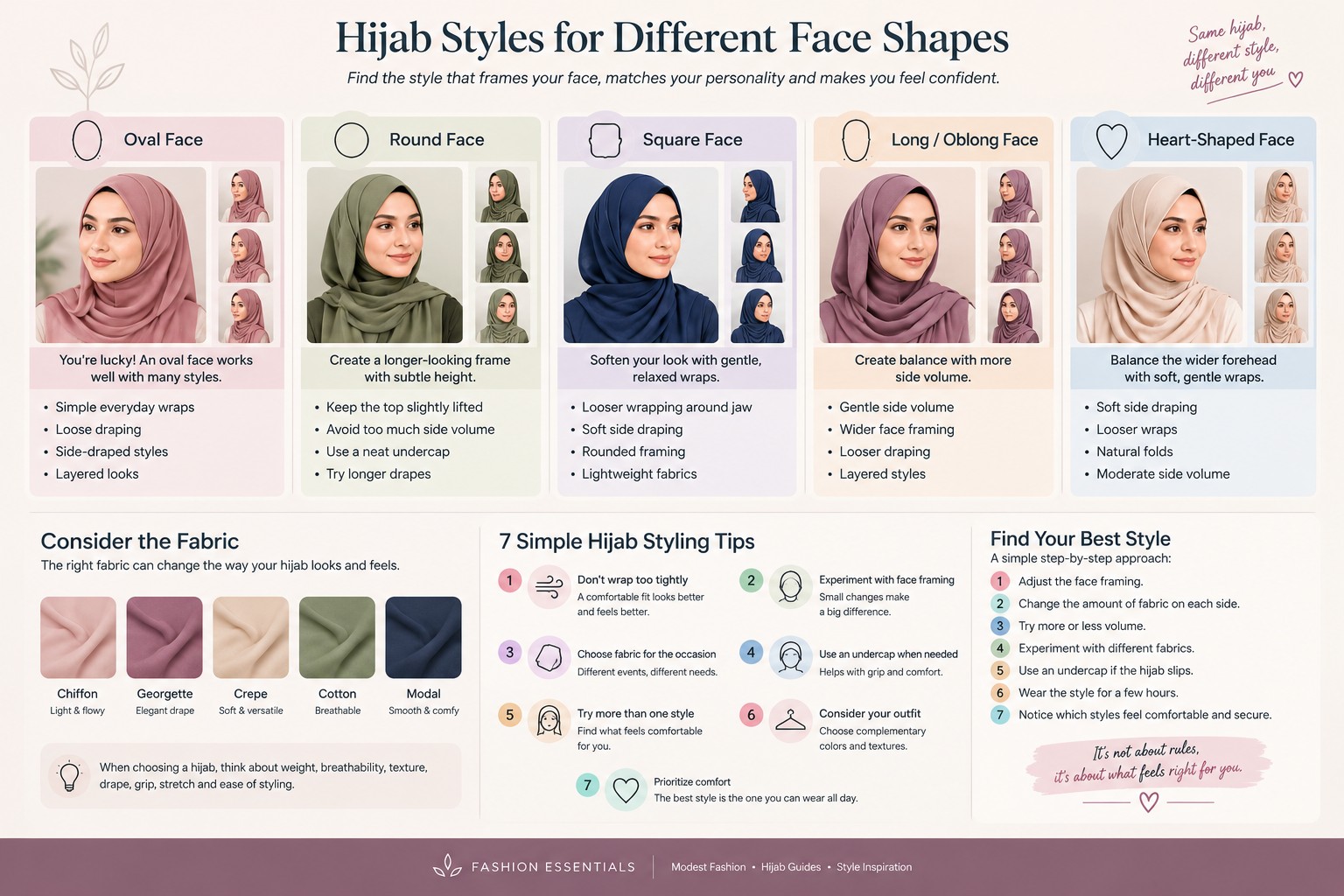
Common face shapes include:
- Oval
- Round
- Square
- Long or oblong
- Heart-shaped
Not everyone’s face fits perfectly into one category. You may have characteristics of more than one face shape.
You don’t need to identify your face shape perfectly. The purpose is simply to understand which types of framing and volume you may prefer.
Hijab Styles for an Oval Face
An oval face is generally longer than it is wide, with a gently rounded jawline.
If you have an oval face, you can experiment with many hijab styles because there are plenty of ways to frame the face.
Try:
- Simple everyday wraps
- Loose draping
- Light volume
- Side-draped styles
- Layered looks
A rectangular hijab can be especially versatile because the extra fabric gives you several options for wrapping and draping.
If you prefer a softer appearance, avoid pulling the fabric too tightly around the face.
Hijab Styles for a Round Face
A round face usually has a softer appearance, with the width and length being relatively similar.
If you want to create a slightly longer-looking frame, you can experiment with subtle height rather than adding too much volume around the sides of the face.
Some ideas include:
- Keeping the top of the hijab slightly lifted
- Creating a longer vertical drape
- Avoiding excessive bulk around the cheeks
- Keeping the front frame neat
- Using a comfortable undercap for a secure base
The goal isn’t to change your natural appearance. Small adjustments can simply help you create a hijab frame that you personally prefer.
Hijab Styles for a Square Face
A square face often has a more defined forehead and jawline.
Softer wrapping techniques can create a gentle frame around the face.
You can experiment with:
- Looser wrapping around the jaw
- Soft side draping
- Rounded framing
- Lightweight fabrics
- Styles with natural movement
Avoid feeling that you have to completely hide the natural shape of your face. A softer fabric and relaxed drape may be enough to create the look you want.
Hijab Styles for a Long or Oblong Face
If your face appears longer than it is wide, you may prefer styles that create more balance around the sides.
Instead of adding too much height at the top, experiment with gentle side volume and a wider face frame.
Try:
- Soft side volume
- Wider face framing
- Looser draping
- Layered styles
- Balanced folds
The way you position the fabric can often make more difference than the specific name of the hijab style.
Hijab Styles for a Heart-Shaped Face
A heart-shaped face often has a wider forehead and a narrower chin.
Soft and balanced wrapping can help create a comfortable frame.
You can try:
- Soft side draping
- Looser wraps
- Natural folds
- Moderate side volume
- Styles that avoid excessive height at the top
These are simply styling ideas. Your comfort and personal preference should always come first.
How Hijab Fabric Affects Your Style
The fabric you choose can significantly affect how your hijab looks and feels.
Some fabrics create soft flowing folds, while others provide more structure or grip.
When choosing a hijab, consider:
- Weight
- Breathability
- Texture
- Drape
- Grip
- Stretch
- Ease of styling
Different fabrics are also better suited to different occasions.
For a more detailed look at common hijab fabrics and styles, read our guide:
12 Types of Hijabs: Complete Guide to Hijab Styles & Fabrics
For warmer weather, you can also explore our guide to Best Hijab Fabrics for Summer through the Fashion Essentials blog.
Why an Under-Scarf Can Help
An under-scarf or hijab cap can make styling easier by providing a more stable base.
It can help:
- Reduce slipping
- Keep the hijab secure
- Create a smoother base
- Make wrapping easier
- Improve everyday comfort
If your hijab tends to move during the day, an undercap can be a useful part of your styling routine.
You can explore Hijab Tube Caps at Fashion Essentials for an everyday under-scarf option.
7 Simple Hijab Styling Tips
1. Don’t Wrap Too Tightly
A very tight hijab can become uncomfortable and may change the way the fabric sits around your face.
A comfortable fit makes it easier to wear your hijab for longer periods.
2. Experiment With Face Framing
Try changing where the fabric sits around your forehead, cheeks, and chin.
Even a small adjustment can create a noticeably different look.
3. Choose Fabric According to the Occasion
An everyday hijab may need different characteristics from a hijab for a formal event.
Think about comfort, drape, texture, and how easy the fabric is to manage.
4. Use an Under-Cap When Needed
If your hijab slips easily, an undercap can provide a more stable foundation.
5. Try More Than One Hijab Style
Don’t assume the first wrapping technique you learn is the only one that will work for you.
Experiment with several different hijab styles and see which ones feel comfortable.
For beginners, our guide How to Wear a Hijab: Easy Step-by-Step Guide for Beginners can help you get started.
6. Consider Your Outfit
Your hijab doesn’t always need to match your clothes exactly.
A complementary color or texture can create a balanced and polished outfit.
7. Prioritize Comfort
The best hijab style is one that you can comfortably wear throughout your day.
A style may look beautiful, but if it constantly slips or feels uncomfortable, it may not be the right everyday option for you.
How to Find Your Best Hijab Style
Finding your preferred hijab style is mostly about experimentation.
Start with a simple wrap and change one thing at a time:
- Adjust the face framing.
- Change the amount of fabric on each side.
- Try more or less volume.
- Experiment with different fabrics.
- Try an undercap if the hijab slips.
- Wear the style for several hours.
- Notice which styles feel comfortable and secure.
Over time, you will probably find a few easy hijab styles that naturally work for your face, wardrobe, and daily routine.
You can also explore our 10 Easy Hijab Styles for Beginners article from the Fashion Essentials blog for more styling ideas.
Different Hijab Styles for Different Occasions
Your ideal hijab style may also depend on where you are going.
Everyday Wear
For everyday use, choose styles that are comfortable, easy to maintain, and suitable for your routine.
Simple rectangular hijabs, lightweight fabrics, and secure wrapping techniques can be practical choices.
Work or Study
For work or study, you may prefer a neat style that stays secure without requiring frequent adjustments.
A comfortable undercap and a manageable fabric can make a big difference.
Formal Occasions
For weddings, dinners, and other formal occasions, flowing fabrics such as chiffon or georgette can create an elegant appearance.
You can experiment with additional draping or layering while keeping the style comfortable.
Warm Weather
During hot weather, lightweight and breathable fabrics may feel more comfortable.
For more information about choosing fabrics for summer, visit the Fashion Essentials Hijab & Modest Fashion Blog.
How to Choose a Hijab Color
Style isn’t only about the way you wrap your hijab. Color can also change the overall appearance of an outfit.
For a versatile wardrobe, consider starting with neutral shades such as:
- Black
- Beige
- Cream
- Grey
- Navy
- Brown
You can then add colors that complement your existing clothing.
You don’t need a different hijab for every outfit. A small collection of versatile colors can provide plenty of combinations.
Final Thoughts
There are many different hijab styles, and you don’t have to limit yourself to one wrapping technique because of your face shape.
Your face shape can provide useful styling guidance, but comfort, personal preference, fabric, coverage, and occasion are equally important.
The best approach is to experiment with different ways of framing your face until you find styles that feel natural and easy to wear.
Whether you’re learning how to wear a hijab for beginners or simply looking for new hijab styling tips, small changes to your wrapping technique can help you create a look that works for you.
For more hijab guides, fabric advice, and modest fashion inspiration, visit the Fashion Essentials Blog.
Frequently Asked Questions
What hijab style is best for a round face?
Styles that create subtle height and avoid excessive volume around the cheeks can work well for a round face. However, comfort and personal preference are more important than following a strict rule.
What hijab style suits an oval face?
An oval face can work well with many different hijab styles. Simple wraps, loose drapes, layered styles, and side-draped looks can all be good options.
How can I make my hijab look more flattering?
Experiment with the way you frame your forehead, cheeks, and chin. Changing the amount of volume and choosing a fabric with suitable drape can also change the overall appearance.
Does hijab fabric affect the style?
Yes. Different fabrics have different levels of weight, grip, structure, and drape. These characteristics affect how easily a hijab holds a particular style.
How can I stop my hijab from slipping?
An appropriate undercap, suitable fabric, and a secure but comfortable wrapping technique can help reduce slipping. You can also read How to Keep Your Hijab in Place All Day on the Fashion Essentials Blog for additional practical tips.