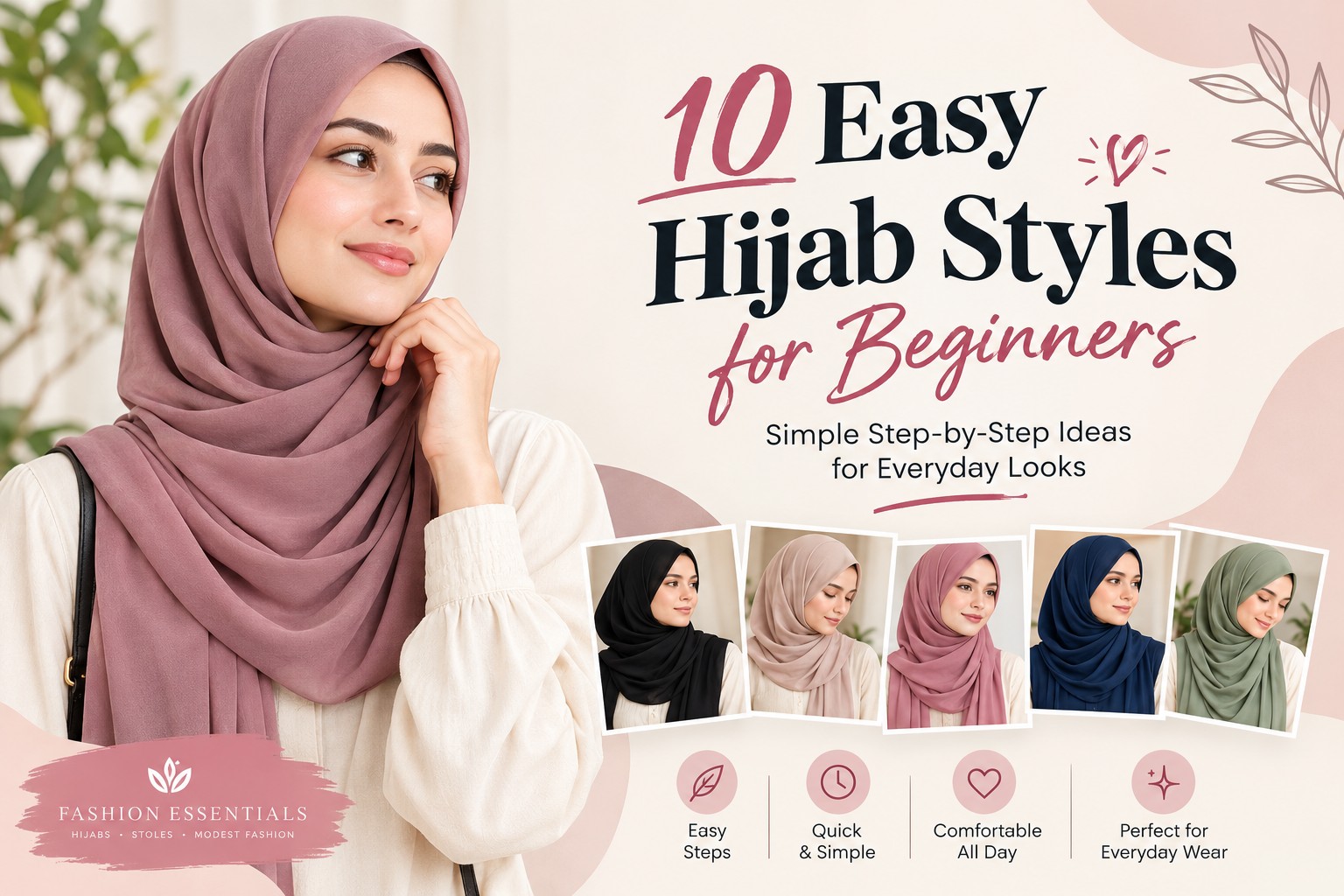
10 Easy Hijab Styles for Beginners: Simple Step-by-Step Ideas
Learning how to style a hijab can feel challenging when you’re just getting started. There are countless tutorials, fabrics, wrapping techniques, and trends to choose from.
The good news is that you don’t need to learn complicated styles immediately.
A few easy hijab styles for beginners can give you a comfortable and polished look for everyday life. Once you understand the basic techniques, you can adjust them according to your preferred coverage, outfit, fabric, and occasion.
If you’re completely new to hijab, you may also find our easy beginner guide on how to wear a hijab helpful before trying different styles.
In this guide, we’ll explore 10 simple hijab styles for beginners, along with tips for choosing the right fabric and keeping your hijab comfortable throughout the day.
What Makes a Hijab Style Beginner-Friendly?
A beginner-friendly hijab style should ideally be:
- Easy to understand
- Quick to wrap
- Comfortable for several hours
- Easy to adjust
- Suitable for everyday wear
- Compatible with commonly available hijabs
You don’t need a complicated number of layers or accessories to create a beautiful hijab look.
In many cases, a simple wrap with good fabric and the right colour can look just as elegant.
10 Easy Hijab Styles for Beginners
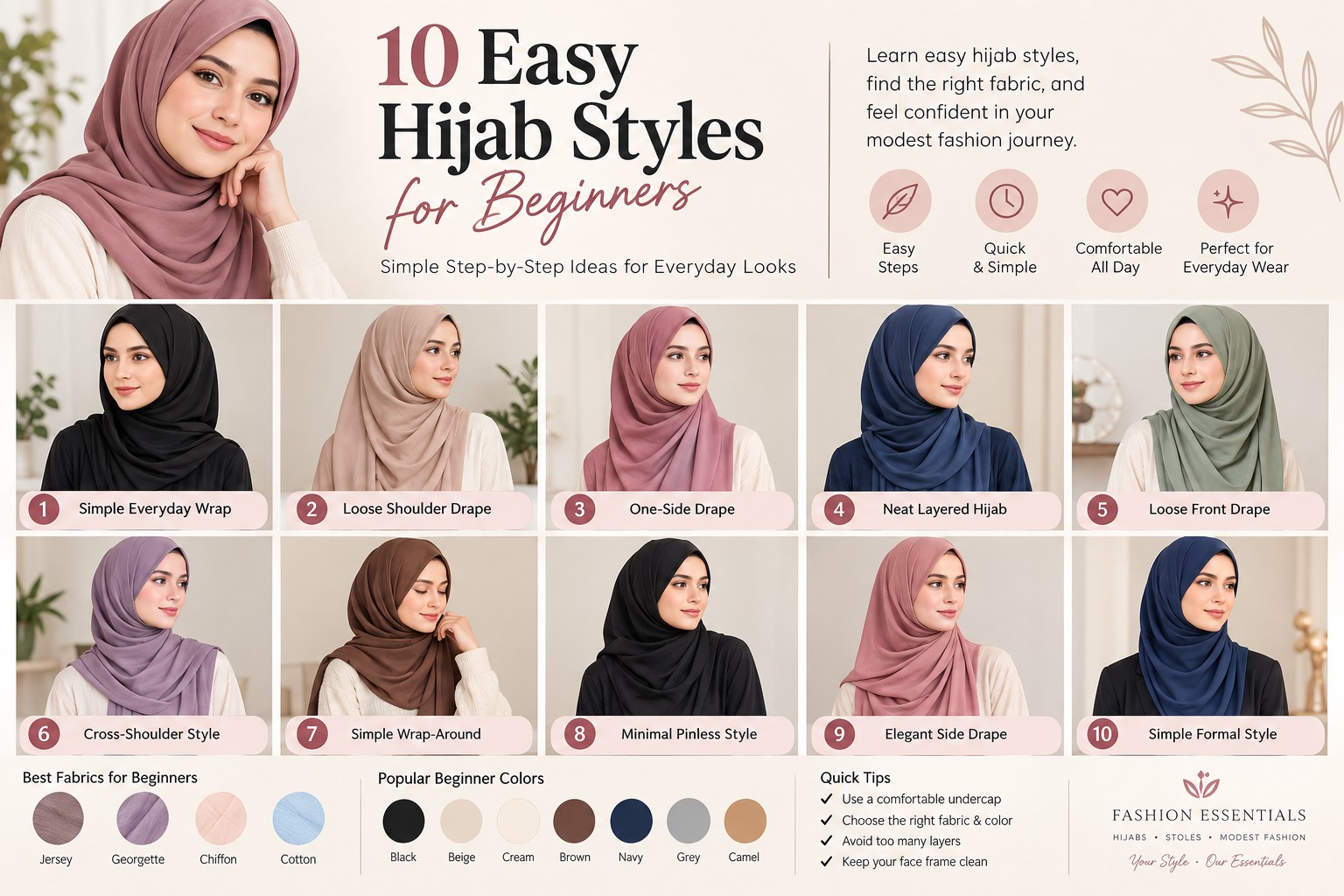
1. Simple Everyday Wrap
The simple everyday wrap is one of the easiest hijab styles to learn.
Start with a rectangular hijab and place it over your head, leaving one side slightly longer than the other.
Bring both sides under your chin and secure them comfortably. Take the longer side across your neck and drape it over the opposite shoulder.
Adjust the fabric around your face until you get the coverage and shape you prefer.
Why beginners like it
- Quick to learn
- Minimal adjustments
- Suitable for daily wear
- Works with many outfits
- Easy to repeat every morning
This is an excellent starting point if you’re learning how to wear a hijab.
2. Loose Shoulder Drape
If you prefer a relaxed and elegant appearance, try a loose shoulder drape.
Place the hijab over your head and adjust the front around your face. Instead of tightly wrapping the remaining fabric around your head, allow it to fall naturally over one or both shoulders.
This style works particularly well with fabrics that have a graceful drape.
Best for
- Casual outfits
- Long dresses
- Abayas
- Relaxed everyday looks
- Elegant minimal styling
3. One-Side Drape
The one-side drape is simple and requires very little wrapping.
Place the hijab over your head with one side longer than the other. Secure it underneath the chin if needed.
Take the longer end and drape it over the opposite shoulder.
The result is a clean and uncomplicated style.
Best for
- Beginners
- Everyday wear
- Work
- Shopping
- University or college
4. Neat Layered Hijab
For a slightly more structured appearance, try creating simple layers around the face.
Place the hijab over your head and secure it comfortably under the chin.
Bring one side around your head and arrange the fabric so that it creates a few neat folds near the face.
Avoid creating too many layers. A small amount of layering can provide structure without making the hijab feel bulky.
Best for
- Work outfits
- Formal casual looks
- Structured clothing
- Everyday styling
If you’re unsure which hijab shapes and fabrics are available, our guide to 12 types of hijabs explains the differences between common hijab types and materials.
5. Loose Front Drape
This style focuses on keeping the front relaxed.
Place the hijab over your head and arrange the fabric around your face. Secure it where necessary and allow the front section to fall naturally.
You can adjust the amount of fabric around your shoulders depending on your preferred coverage.
This style can work especially well with lightweight fabrics.
6. Cross-Shoulder Hijab Style
The cross-shoulder style creates a little more movement in the drape.
Start with one side longer than the other.
Secure the hijab comfortably underneath your chin. Take the longer side across the front of your body and place it over the opposite shoulder.
You can leave the fabric loose or secure it discreetly if you prefer a more structured appearance.
Best for
- Long rectangular hijabs
- Everyday outfits
- Modest dresses
- Abayas
7. Simple Wrap-Around Style
This is a practical style when you want more fabric around your neck and shoulders.
Place the hijab on your head and leave both sides relatively even.
Secure the scarf underneath your chin if necessary.
Take one side around the back of your head and allow the remaining fabric to fall over the shoulder.
Repeat or adjust the other side according to your preferred coverage.
The exact arrangement can be changed depending on the length and width of your hijab.
8. Minimal Pinless Style
If you prefer not to use pins, choose a fabric with enough grip and a style that doesn’t require extensive securing.
Stretchy fabrics such as jersey can sometimes be convenient for this type of look.
An appropriate undercap can also help create a more stable foundation.
A simple approach is:
- Place the hijab over your head.
- Adjust the front.
- Wrap one side around the head.
- Drape the remaining fabric over your shoulder.
- Make small adjustments until it feels secure.
Remember that not every fabric will behave the same way, so experiment to find what works for you.
9. Elegant Side Drape
You can turn a simple hijab into a more polished look by changing where the fabric falls.
Place and secure the hijab normally.
Then take the longer section and arrange it toward one side of your body.
Allow the fabric to fall naturally rather than creating many folds.
This can be a simple option for dinners, gatherings, and occasions where you want something slightly more elegant without using a complicated technique.
10. Simple Formal Hijab Style
A formal hijab style doesn’t need to be complicated.
Start with a clean and comfortable wrap.
Create a neat frame around the face and arrange the remaining fabric around the shoulders.
A dressier fabric such as chiffon or georgette can create an elegant appearance, while a carefully chosen color can complement your outfit.
For formal occasions, focus on:
- Clean folds
- Balanced draping
- Coordinated colors
- Comfortable securing
- Appropriate coverage
The result can look polished without requiring an advanced wrapping technique.
Which Hijab Fabric Is Best for Beginners?
The best fabric depends on your personal preference.
However, beginners may find some fabrics easier to manage than others.
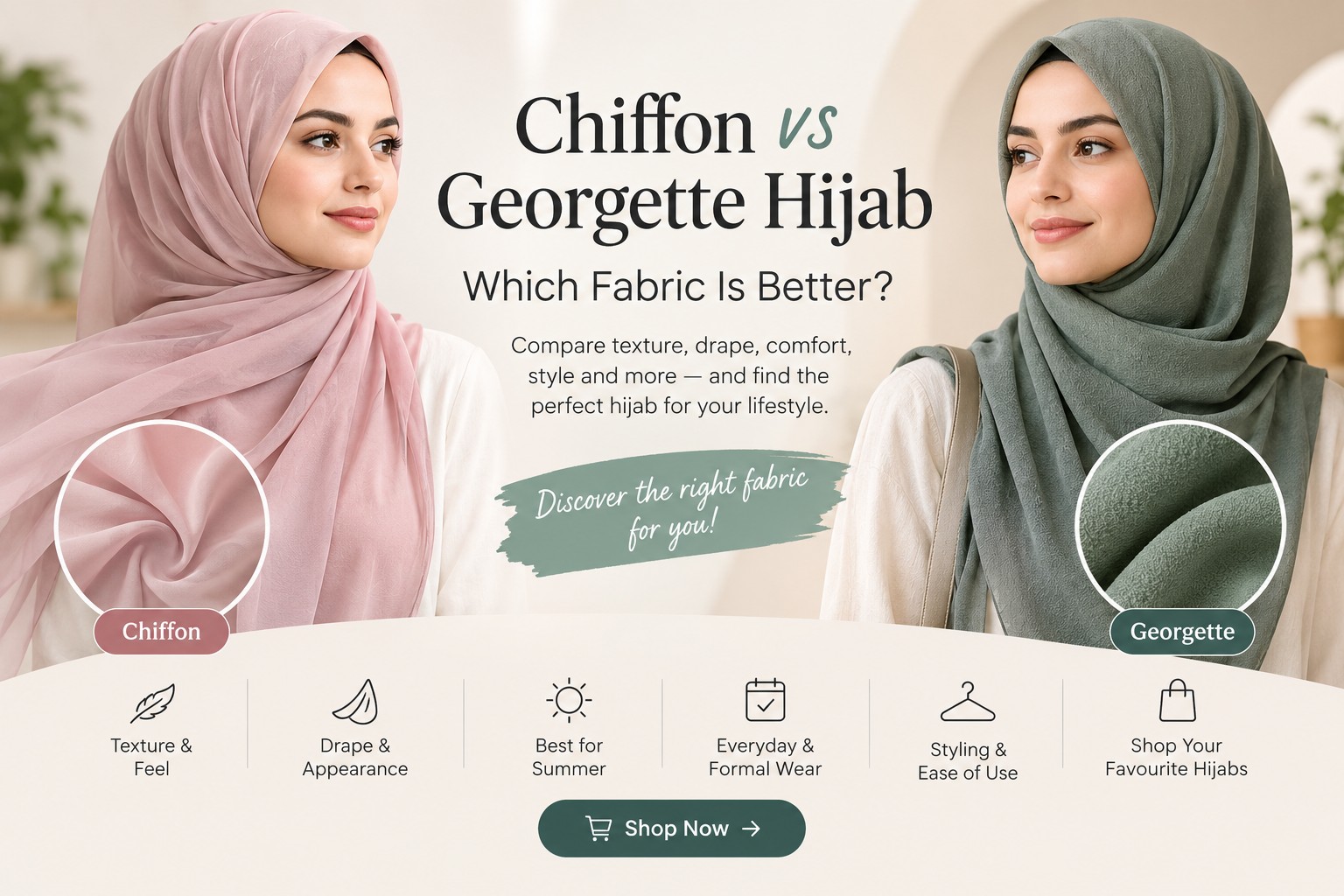
If you’re unfamiliar with the different materials available, our guide to 12 types of hijabs and their fabrics is a useful starting point.
Jersey
Jersey is soft and stretchy, which can make it convenient for everyday styling.
It can also stay relatively secure without extensive pinning.
Georgette
Georgette can provide a graceful drape while offering some texture.
Depending on the particular fabric, this can make it easier to manage than very smooth materials.
Chiffon
Chiffon is lightweight and elegant.
It can be excellent for creating flowing styles, although some chiffon fabrics may require an undercap or suitable securing method.
Cotton
Cotton can provide a comfortable, breathable feel and can be a practical option for casual everyday wear.
When choosing a beginner hijab, think about the fabric’s feel, weight, stretch, texture, and how easily you can position it.
What Size Hijab Is Best for Beginners?
There isn’t one universal size that works for everyone.
A rectangular hijab with enough length to wrap around your head and drape over your shoulders can be a practical starting point.
A larger hijab gives you more fabric to experiment with, while a smaller one may be easier to manage for simple styles.
Your preferred level of coverage should also influence the size you choose.
Do Beginners Need a Hijab Undercap?
An undercap isn’t mandatory, but it can be useful.
It may help:
- Keep hair contained
- Create a secure base
- Reduce movement
- Make some fabrics easier to style
- Provide additional coverage
If your hijab moves frequently, trying a suitable undercap may make your routine easier.
For a more detailed introduction to hijab basics and styling, you can also read our beginner guide to wearing a hijab.
How to Make a Beginner Hijab Style Look Better
Simple does not mean boring.
You can improve a basic hijab style with a few small changes.
Choose a Good Color Combination
You don’t always need an exact color match between your hijab and clothing.
Try complementary or neutral combinations.
Keep the Face Frame Clean
Small adjustments around the face can make a significant difference.
Avoid Excessive Layers
Too many layers can make the hijab look bulky.
Use the Right Fabric
Different fabrics create different levels of volume and drape.
Coordinate With Your Outfit
A simple hijab can look sophisticated when paired with a well-coordinated outfit.
Best Hijab Colors for Beginners
If you’re building your first hijab collection, begin with versatile colors.
Some useful starting colors include:
- Black
- Beige
- Cream
- Brown
- Navy
- Grey
- Camel
Once you have your basic colors, you can introduce shades such as:
- Maroon
- Mustard
- Olive
- Teal
- Pink
- Lavender
Having both neutral and accent colors gives you more outfit combinations.
Easy Hijab Styles for Everyday Wear
For everyday wear, choose styles that you can recreate quickly.
A good everyday routine might involve:
Step 1: Choose a comfortable hijab.
Step 2: Put on an undercap if needed.
Step 3: Place the hijab evenly or with one side longer.
Step 4: Secure it comfortably.
Step 5: Wrap or drape the fabric.
Step 6: Make small adjustments around the face.
Step 7: Check your desired coverage.
If you are still learning the basics, our step-by-step guide to wearing a hijab can help you become comfortable with the basic wrapping process.
Once you’ve found a style you like, you can repeat the same technique using different colors and fabrics.
How to Practice Hijab Styles
Don’t expect every style to look perfect on the first attempt.
Practice at home when you have a few spare minutes.
Start with one technique and repeat it several times.
Once you can create it comfortably, move to another style.
You can also experiment with the same technique using different hijab fabrics. You may notice that chiffon, georgette, jersey, and cotton behave differently.
Over time, you’ll develop a few reliable styles that you can create quickly.
Frequently Asked Questions
What is the easiest hijab style for beginners?
A simple everyday rectangular hijab wrap is one of the easiest styles to learn. It requires relatively few steps and can be adjusted according to your preferred coverage.
Which hijab fabric is easiest for beginners?
There is no single best option for everyone. Jersey can be convenient because it is stretchy, while georgette may offer useful texture and drape. Chiffon can be elegant but may require additional securing.
You can learn more about the characteristics of different materials in our guide to 12 types of hijabs.
Can I wear a hijab without pins?
Yes. Some fabrics and styles can be worn without traditional pins. Stretchy or textured fabrics may provide more grip, and an undercap can also help.
How can I make my hijab stay in place?
Choose a suitable fabric, use an undercap if helpful, and avoid wrapping the hijab either too loosely or uncomfortably tightly. Pins or magnets can provide additional security when needed.
How many hijab styles should a beginner learn?
You don’t need to learn many styles at once. Start with two or three comfortable everyday styles and gradually experiment with others.
Final Thoughts
You don’t need complicated techniques to look polished in a hijab.
Start with one simple style, learn how the fabric behaves, and gradually experiment with different ways of wrapping and draping it.
If you’re completely new to hijab, start with our easy beginner guide on how to wear a hijab, then explore different types of hijabs and fabrics as you become more comfortable.
The most useful hijab style is often the one that is comfortable, secure, easy to recreate, and suitable for your everyday life.
Once you’ve mastered a few simple techniques, changing your hijab color or fabric can create an entirely different look.
Explore Fashion Essentials for hijabs, stoles, and modest fashion essentials to build a comfortable and versatile everyday collection.