12 Types of Hijabs: Complete Guide to Hijab Styles & Fabrics
Choosing a hijab can sometimes feel overwhelming because there are so many different options available. Hijabs come in different shapes, fabrics, sizes, colors, and styles, and each type can create a different look.
If you are new to hijab, understanding the different types of hijabs can make it much easier to find the right option for your wardrobe.
Some hijabs are better suited for everyday wear, while others are popular for formal occasions. Some fabrics are lightweight and flowing, while others provide more grip and structure.
In this guide, we’ll explore 12 common types of hijabs and hijab styles, explain their characteristics, and help you understand which options may work best for different situations.
What Are the Different Types of Hijabs?
There isn’t one universal system for classifying hijabs. A hijab can be described according to its shape, fabric, construction, or the way it is worn.
For example, a rectangular hijab describes the shape, while a chiffon hijab describes the fabric.
Understanding this difference is useful when shopping because you may see the same shape available in several different fabrics.
Let’s look at the most common options.
1. Rectangular Hijab
A rectangular hijab is one of the most versatile options available.
It is made from a long rectangular piece of fabric and can be wrapped around the head in several ways. The extra length can also be draped over the shoulders.
Rectangular hijabs are popular for everyday wear because they offer flexibility in styling.
Best for:
- Everyday wear
- Different wrapping styles
- Layered looks
- Casual and formal outfits
2. Square Hijab
A square hijab has approximately equal-length sides.
One common way to wear it is to fold the square diagonally into a triangle before placing it over the head.
Square hijabs can create a neat and structured appearance and are particularly popular with traditional and classic hijab styles.
Best for:
- Classic hijab looks
- Neat styling
- Formal outfits
- Traditional-inspired styles
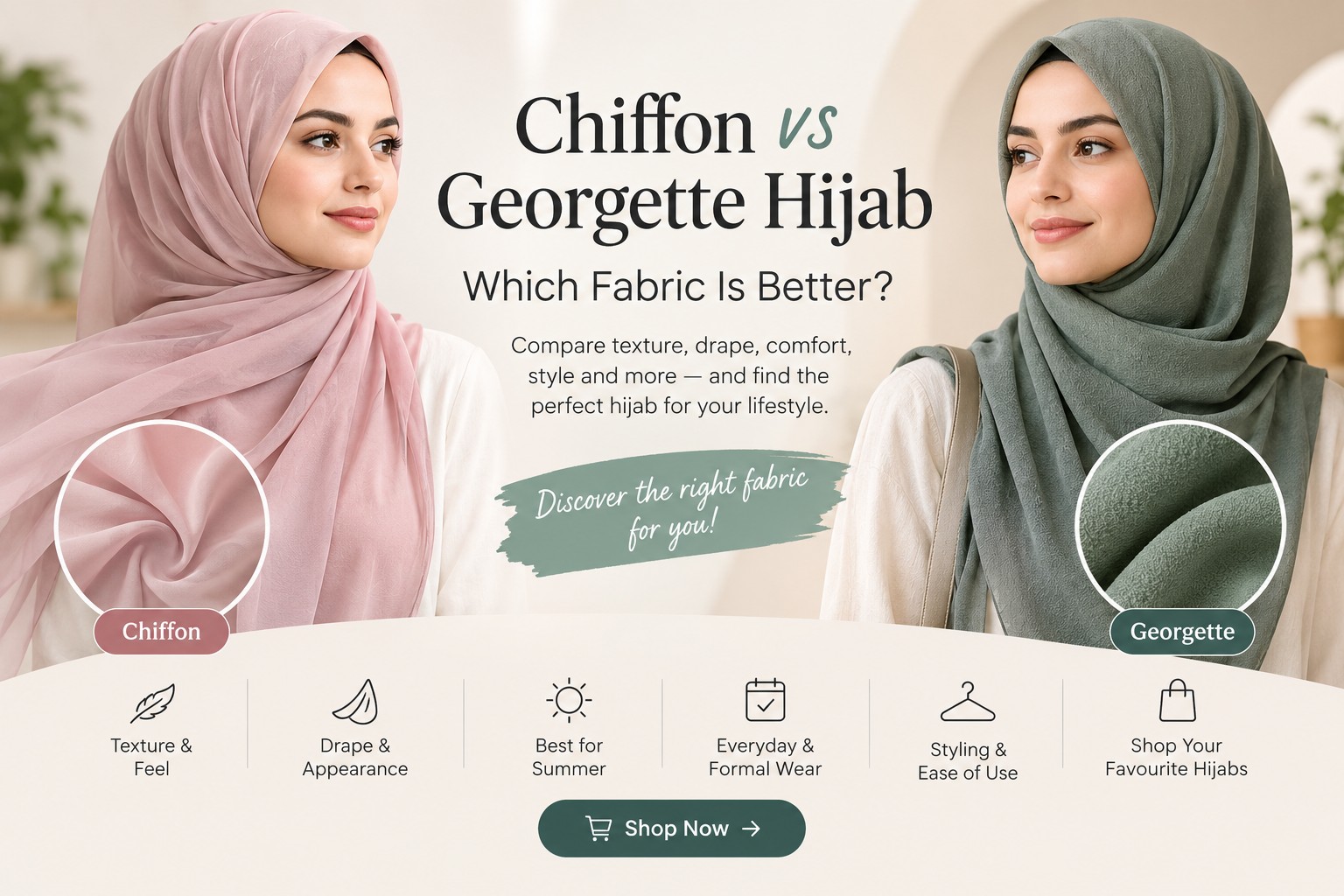
3. Chiffon Hijab
Chiffon is a lightweight fabric frequently used for hijabs.
Its flowing appearance can create an elegant look, making it suitable for both everyday outfits and occasions where you want a more polished appearance.
Because some chiffon fabrics can be relatively slippery, many women prefer wearing an undercap underneath.
Best for:
- Elegant looks
- Layered styling
- Formal occasions
- Lightweight outfits
4. Georgette Hijab
Georgette is another popular hijab fabric.
It generally has a slightly textured surface compared with very smooth fabrics. This texture can make it easier to manage while styling, depending on the particular fabric.
Georgette can provide an elegant drape while remaining practical for many everyday and occasion-based looks.
Best for:
- Everyday wear
- Elegant styling
- Draped looks
- Formal outfits
5. Jersey Hijab
Jersey hijabs are usually soft and stretchy.
The stretch makes jersey convenient for everyday styling because it can often be wrapped securely without requiring as many pins or adjustments.
Jersey can also create a more relaxed and casual appearance.
Best for:
- Everyday wear
- Casual outfits
- Beginners
- Comfortable styling
6. Cotton Hijab
Cotton hijabs are valued for their natural feel and breathability.
They can be a practical option for warm weather and casual everyday outfits, although the exact feel depends on the type and weight of cotton used.
Cotton can also provide a more structured appearance than some lightweight flowing fabrics.
Best for:
- Casual wear
- Warm weather
- Everyday outfits
- People who prefer natural-feeling fabrics
7. Modal Hijab
Modal is a soft fabric that has become popular in modest fashion.
Modal hijabs are often appreciated for their soft feel, comfortable drape, and versatility.
They can work particularly well for relaxed everyday styles.
Best for:
- Everyday wear
- Soft draping
- Comfortable outfits
- Casual styling
8. Crinkle Hijab
Crinkle hijabs have a textured, intentionally wrinkled appearance.
The texture can add visual interest to an outfit while also making small creases less noticeable than they might be on very smooth fabrics.
They are available in different materials and colors.
Best for:
- Casual outfits
- Textured looks
- Easy styling
- Travel wardrobes
9. Instant Hijab
An instant hijab is designed to be worn with minimal wrapping.
Instead of starting with a loose piece of fabric and creating the entire style yourself, the hijab may have a pre-shaped or pre-stitched construction.
This makes instant hijabs particularly convenient when you want a quick and simple look.
Best for:
- Beginners
- Busy mornings
- Quick styling
- Everyday use
10. Khimar
A khimar is a type of garment designed to provide head and upper-body coverage.
Unlike a simple headscarf, a khimar can extend over the shoulders and chest, depending on its design and length.
Khimars are available in different fabrics and styles.
Best for:
- Greater coverage
- Modest outfits
- Everyday wear
- Those who prefer a longer covering
11. Shayla
Shayla generally refers to a long rectangular headscarf that can be wrapped around the head and draped in different ways.
Because it is rectangular, it provides plenty of flexibility for styling.
The exact way it is worn can vary across cultures and personal preferences.
Best for:
- Flexible styling
- Long drapes
- Everyday outfits
- Layered looks
12. Al-Amira Hijab
An Al-Amira hijab is typically designed as a two-piece head covering, often consisting of a fitted cap or tube-like piece underneath and a matching scarf or covering over it.
Its construction can make it relatively simple to put on and secure.
Best for:
- Beginners
- Quick styling
- Secure everyday wear
- Those who prefer simple designs
Hijab Types by Fabric
Another useful way to understand hijabs is by looking at the fabric.
Different fabrics can dramatically change how a hijab feels and behaves.
Chiffon
Lightweight and flowing, chiffon can create an elegant appearance.
Georgette
Georgette typically has more texture than very smooth fabrics and can provide a graceful drape.
Jersey
Stretchy and soft, jersey is often chosen for comfortable everyday styling.
Cotton
Cotton can offer a breathable and natural feel and is commonly used for casual wear.
Modal
Modal is known for its softness and comfortable drape.
Crinkle Fabrics
Crinkle textures add dimension to a hijab and can make styling more relaxed.
There is no universally “best” fabric. The right choice depends on your preferred style, climate, comfort, and occasion.
Hijab Types by Shape
Hijabs can also be divided into two basic shapes.
Square Hijabs
Square hijabs can be folded into a triangle and styled around the face.
They can provide a neat, classic appearance.
Rectangular Hijabs
Rectangular hijabs offer more length for wrapping and draping.
They are particularly versatile when you want to experiment with different styles.
Which Type of Hijab Is Best for Beginners?
If you are just starting to wear hijab, simplicity is usually more important than choosing the most elaborate style.
A soft jersey hijab can be convenient because of its stretch and comfortable fit.
A rectangular chiffon or georgette hijab can also be a good choice if you want to learn different wrapping techniques.
An instant hijab can be particularly useful if you want a quick style without learning complicated wrapping methods.
The best option is ultimately the one that feels comfortable and is easy for you to manage.
Which Hijab Is Best for Everyday Wear?
For everyday use, look for a combination of:
- Comfort
- Easy styling
- Suitable coverage
- A manageable fabric
- A versatile color
Jersey, cotton, modal, georgette, and some chiffon hijabs can all work well depending on your preferences and climate.
For a busy daily routine, having several easy-to-style hijabs in neutral colors can make getting dressed much simpler.
Which Hijab Is Best for Summer?
Summer hijabs should generally be comfortable and suitable for warm conditions.
Lightweight fabrics can be appealing because they may feel less heavy, while breathable materials can help improve comfort.
Your choice should also depend on the climate where you live.
Instead of choosing a hijab based only on its name, pay attention to the actual fabric composition, thickness, construction, and how it feels when worn.
Which Hijab Is Best for Formal Occasions?
For weddings, dinners, parties, and other formal events, many women prefer fabrics that create an elegant drape.
Chiffon and georgette can be suitable choices for dressier looks.
Color also plays an important role. A carefully coordinated hijab can complement an abaya, dress, or formal outfit without needing to match it exactly.
How to Choose the Right Hijab
Before buying a hijab, ask yourself five simple questions:
1. Where will I wear it?
An everyday hijab may need different characteristics from one intended for a wedding.
2. What fabric do I prefer?
Think about softness, texture, weight, stretch, and drape.
3. How much coverage do I want?
Choose a shape and size that provide the level of coverage you are comfortable with.
4. Which colors will work with my wardrobe?
Neutral colors are versatile, while stronger colors can add variety.
5. How easy is it to style?
If you are new to hijab, a manageable fabric and simple shape can make the learning process easier.
How Many Types of Hijabs Should You Have?
You don’t need every type of hijab.
A practical collection can contain a mixture of versatile everyday pieces and a few options for special occasions.
For example, you could start with:
- Neutral everyday hijabs
- A few colorful hijabs
- One or two dressier fabrics
- A comfortable hijab for warm weather
- An easy-to-style option for busy days
As your wardrobe grows, you can experiment with different fabrics and styles.
Final Thoughts
There are many different types of hijabs, and each has its own advantages.
Square and rectangular hijabs describe the shape, while chiffon, georgette, jersey, cotton, modal, and other terms describe fabrics. Styles such as instant hijabs, khimars, and Al-Amira hijabs may have different constructions designed for particular preferences.
The best hijab isn’t necessarily the most expensive or fashionable one. It is the one that provides the comfort, coverage, style, and practicality you need.
If you’re building your hijab wardrobe, start with a few versatile colors and comfortable fabrics. You can then gradually explore different styles as you discover what works best for you.
Explore Fashion Essentials for hijabs, stoles, and modest fashion essentials designed for everyday wear.