How to Choose the Right Hijab Color for Your Skin Tone & Outfits
Choosing the right hijab color can completely change the way an outfit looks.
Sometimes an outfit feels incomplete even though everything else is right. The problem may simply be the hijab color.
With so many shades available—from classic black and beige to soft pink, navy, maroon, mustard and teal—it can be difficult to know which colors are worth adding to your wardrobe.
The good news is that choosing hijab colors doesn’t have to be complicated.
You can build a versatile hijab collection by considering your existing clothes, personal style, the occasion, and the colors you naturally enjoy wearing.
This guide explains how to choose hijab colors, how to match them with outfits, and which shades are useful for building an everyday modest wardrobe.
Why Does Hijab Color Matter?
Your hijab is often one of the most noticeable parts of your outfit.
Because it frames your face, the color can affect the overall appearance of your look.
The right shade can:
- Complement your outfit
- Create contrast
- Make neutral clothing more interesting
- Coordinate different pieces
- Create a polished appearance
- Reflect your personal style
You don’t need a separate hijab for every outfit.
Instead, focus on building a collection of versatile colors that work with multiple combinations.
How to Choose a Hijab Color
There are four simple things to consider:
- Your wardrobe
- Your preferred colors
- The occasion
- Your skin’s natural undertone
Your wardrobe should generally come first.
A beautiful hijab color isn’t particularly useful if it doesn’t work with the clothing you actually wear.
1. Start With Your Wardrobe
Look at the colors you already wear most often.
Do you usually wear:
- Black?
- White?
- Beige?
- Brown?
- Navy?
- Grey?
- Pastel colors?
- Earth tones?
If most of your wardrobe consists of neutral clothing, you can choose either neutral hijabs or introduce accent colors.
For example, a beige outfit can work with:
- Cream
- Brown
- Camel
- Black
- Olive
- Maroon
You don’t always need an exact color match.
In fact, combining slightly different shades can create a more interesting outfit.
2. Build a Neutral Hijab Collection First
If you’re starting from scratch, neutral hijab colors are usually the easiest place to begin.
Consider:
Black
Black is one of the most versatile hijab colors.
It works with casual outfits, formal clothing, abayas and many different color combinations.
Beige
Beige is a useful everyday neutral.
It can complement white, brown, black, cream, navy and many earth tones.
Cream
Cream provides a softer alternative to stark white.
It works particularly well with neutral and warm-toned outfits.
Brown
Brown can create a warm, coordinated appearance with beige, cream, camel and other earth tones.
Navy
Navy is a useful alternative when you want something darker without choosing black.
Grey
Grey can work with both cool and neutral clothing.
Camel
Camel is particularly useful with beige, brown, cream, olive and other warm shades.
3. Add Accent Hijab Colors
Once you have your basic neutrals, add colors that give your wardrobe more variety.
Some popular options include:
- Maroon
- Mustard
- Olive
- Teal
- Pink
- Lavender
- Soft blue
- Burgundy
Accent colors can transform a simple outfit.
For example, a neutral beige outfit paired with a rich maroon hijab can create a much more defined appearance.
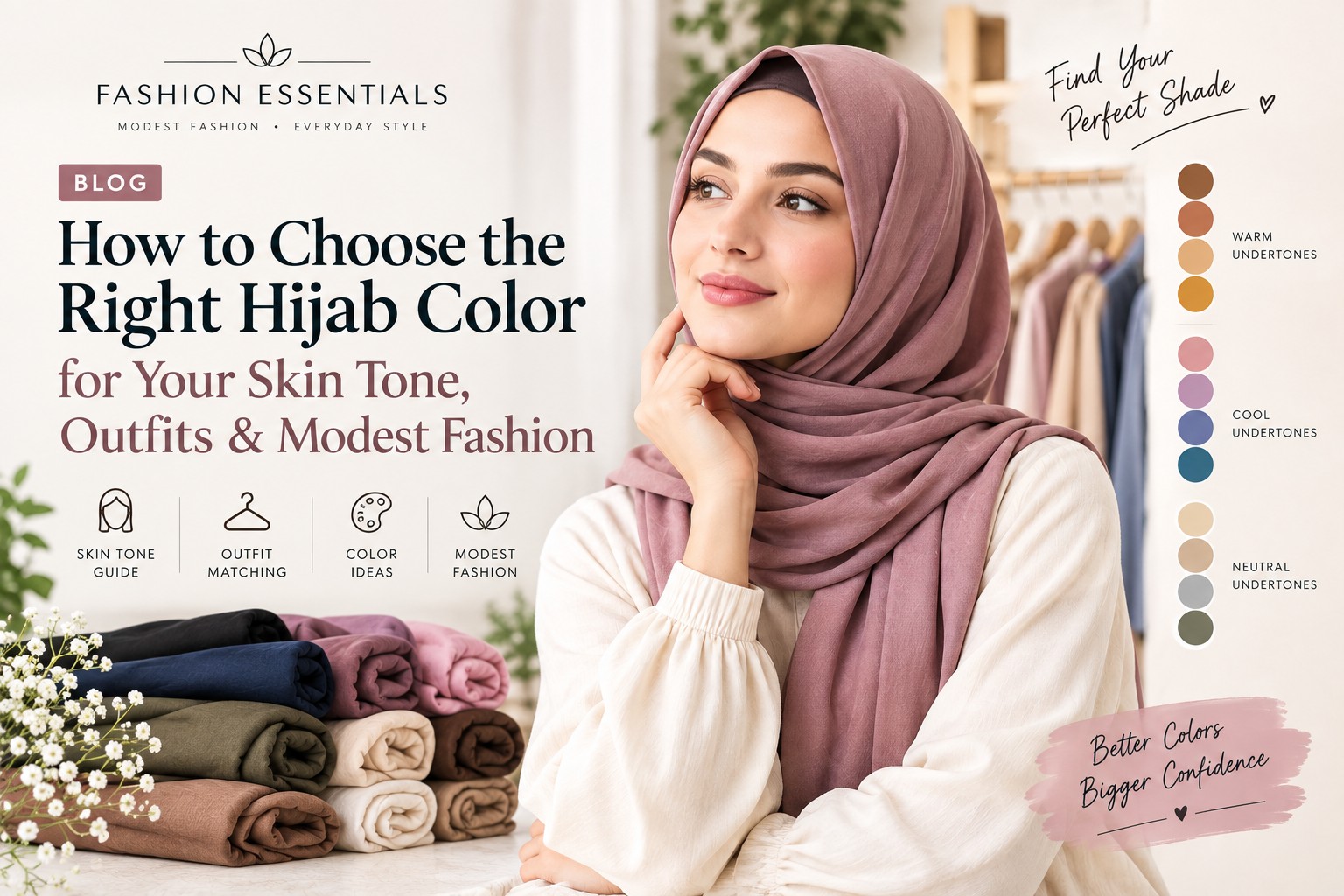
Hijab Colors for Different Skin Undertones
Many people wonder which hijab colors are best for their skin tone.
There is no strict rule because personal preference matters more than fashion rules.
However, understanding warm, cool and neutral undertones can help you experiment.
Warm Undertones
Warm undertones often work beautifully with earthy and warm shades.
Try:
- Camel
- Brown
- Mustard
- Olive
- Warm beige
- Terracotta
- Warm maroon
- Cream
These colors can create a harmonious appearance.
Cool Undertones
Cool undertones may work well with cooler or jewel-inspired shades.
Try:
- Navy
- Teal
- Lavender
- Cool pink
- Burgundy
- Blue
- Cool grey
These can create attractive contrast and complement cooler clothing.
Neutral Undertones
If you have a neutral undertone, you may find that you can comfortably experiment with both warm and cool shades.
Try:
- Beige
- Cream
- Navy
- Brown
- Pink
- Teal
- Olive
- Grey
- Maroon
The best way to know is to try different shades near your face and see which ones you prefer.
How to Match Your Hijab With Your Outfit
Your hijab doesn’t always need to match your clothing exactly.
There are several approaches.
Matching Colors
The simplest approach is to choose a hijab in a similar color family.
For example:
Beige outfit + camel hijab
Navy outfit + blue hijab
Brown outfit + cream hijab
This creates a coordinated appearance.
Complementary Colors
You can also create contrast.
For example:
Navy outfit + soft pink hijab
Olive outfit + cream hijab
Beige outfit + maroon hijab
Contrast can make a simple outfit more visually interesting.
Monochromatic Styling
A monochromatic outfit uses different shades of the same color family.
For example:
- Cream clothing
- Beige hijab
- Camel accessories
This can create a sophisticated and coordinated appearance without requiring identical colors.
Best Hijab Colors for Black Outfits
Black is extremely versatile.
You can pair a black outfit with:
- Black
- Beige
- Cream
- Grey
- White
- Camel
- Maroon
- Mustard
- Pink
- Navy
For a minimal appearance, choose black, cream or beige.
For more contrast, try maroon, mustard or pink.
Best Hijab Colors for White Outfits
White clothing provides a blank canvas.
You can pair it with almost any color.
Try:
- Beige
- Cream
- Brown
- Navy
- Maroon
- Teal
- Olive
- Pink
- Black
The choice depends on whether you want a soft, neutral or bold look.
Best Hijab Colors for Beige Outfits
Beige works particularly well with other neutral and earthy shades.
Good options include:
- Cream
- Camel
- Brown
- Black
- Olive
- Maroon
- Navy
A beige outfit with a camel or cream hijab creates a soft neutral look.
A maroon or navy hijab adds stronger contrast.
Best Hijab Colors for Navy Outfits
Navy can be paired with:
- Cream
- Beige
- White
- Grey
- Pink
- Camel
- Burgundy
- Light blue
For an elegant everyday look, beige or cream can work particularly well.
Best Hijab Colors for Brown Outfits
Brown clothing works beautifully with warm neutrals.
Try:
- Cream
- Beige
- Camel
- Light peach
- Olive
- Mustard
- Maroon
You can also use black or navy when you want stronger contrast.
Best Hijab Colors for Green and Olive Outfits
Olive and green clothing can be paired with:
- Cream
- Beige
- Camel
- Brown
- Mustard
- Maroon
- Black
Earth-tone combinations can create a natural and sophisticated modest-fashion look.
Best Hijab Colors for Pink Outfits
Pink clothing can be styled with both soft and contrasting colors.
Try:
- Cream
- Beige
- White
- Grey
- Brown
- Navy
- Burgundy
A soft pink outfit with a cream hijab can create a gentle appearance, while navy or burgundy provides more contrast.
Hijab Colors for Different Occasions
The occasion can also influence your choice.
Everyday Wear
For everyday outfits, choose versatile colors such as:
- Black
- Beige
- Cream
- Brown
- Grey
- Navy
- Camel
These can work with many outfits.
Work
For professional environments, neutral and understated colors can be easy to coordinate.
Consider:
- Navy
- Black
- Beige
- Cream
- Brown
- Grey
Weddings and Formal Events
Special occasions give you more room to experiment.
You can consider:
- Burgundy
- Maroon
- Teal
- Deep navy
- Dusty pink
- Lavender
- Jewel tones
Choose a shade that complements your outfit without competing with it.
Should Your Hijab Match Your Clothes?
No.
Your hijab doesn’t have to be exactly the same color as your clothing.
Matching can work, but coordination can often create a more natural and stylish appearance.
For example:
Cream dress + beige hijab
can look more dimensional than:
Cream dress + exact cream hijab
Similarly:
Navy outfit + soft pink hijab
can create attractive contrast.
How Many Hijab Colors Should You Own?
There is no required number.
If you’re building a new collection, start with around five to seven versatile colors.
A useful starting set could be:
- Black
- Beige
- Cream
- Brown
- Navy
- Grey
- Camel
Then add colors based on your wardrobe.
For example, if you regularly wear earth tones, add olive, mustard and maroon.
If you wear many pastel outfits, consider pink, lavender and soft blue.
How to Create a Capsule Hijab Collection
A capsule hijab wardrobe focuses on a small number of pieces that work with many outfits.
Step 1: Choose three neutral colors
For example:
- Black
- Beige
- Cream
Step 2: Add two dark shades
For example:
- Navy
- Brown
Step 3: Add two accent colors
For example:
- Maroon
- Mustard
Now you have seven hijab colors that can work across many outfits.
You can expand the collection later based on what you actually wear.
Don’t Choose Colors Only Because They’re Trending
Fashion trends change.
Your hijab wardrobe should primarily reflect your personal style.
A trendy color that doesn’t work with your clothes may spend most of its time sitting in your wardrobe.
Instead, choose colors you know you’ll wear.
Versatility is often more valuable than simply following trends.
A Simple Hijab Color Formula
If you’re unsure what color to choose, try this formula:
Neutral outfit → neutral or accent hijab
Bold outfit → neutral hijab
Neutral hijab → colorful outfit
Simple outfit → use the hijab as an accent
This gives you an easy starting point without overthinking every combination.
Frequently Asked Questions
What is the best hijab color?
There is no single best hijab color. Black, beige, cream, brown, navy and grey are versatile starting colors, while accent shades can add variety.
Which hijab color suits every outfit?
Black, beige, cream and neutral brown are among the most versatile options. However, the best choice depends on your wardrobe.
How do I choose a hijab color for my skin tone?
Consider whether your skin has a warm, cool or neutral undertone, then experiment with shades that complement it. Personal preference is equally important.
Should my hijab match my dress?
Not necessarily. Your hijab can match, coordinate with, or contrast your outfit.
What are the best neutral hijab colors?
Black, beige, cream, brown, grey, navy and camel are useful neutral and near-neutral choices for many wardrobes.
What hijab colors are best for everyday wear?
Black, beige, cream, brown, navy, grey and camel are practical everyday colors because they can coordinate with many outfits.
Final Thoughts
Learning how to choose hijab color doesn’t require following strict fashion rules.
Start with the colors you already wear, build a foundation of versatile neutrals, and then introduce accent shades that reflect your personal style.
Think about your outfit, occasion, climate, preferred colors and how the shade looks around your face.
Most importantly, wear colors that make you feel comfortable and confident.
A thoughtfully selected hijab collection doesn’t need hundreds of colors. A handful of versatile shades can create dozens of outfit combinations.
Explore Fashion Essentials’ hijabs and modest fashion essentials to find versatile colors for your everyday wardrobe and special occasions.