How to Keep Your Hijab in Place All Day: 10 Easy Tips for a Secure & Comfortable Hijab
One of the most common problems for anyone who wears a hijab is keeping it in place throughout the day.
You carefully style your hijab in the morning, leave home, and then a few hours later it starts moving, slipping, loosening, or changing shape.
Fortunately, you don’t necessarily need a complicated hijab wrapping technique to solve the problem.
The right combination of hijab fabric, undercap, fit, styling technique, and securing method can make your everyday hijab much easier to manage.
In this guide, we’ll explain how to keep your hijab in place all day, why hijabs slip, and what you can do to create a more secure, comfortable and practical hijab style for everyday modest fashion.
If you’re looking for hijabs and modest fashion essentials for everyday wear, you can also explore Fashion Essentials or visit our Shop.
Why Does My Hijab Keep Slipping?
There isn’t always one reason why a hijab keeps slipping.
Your hijab may move because of:
- A slippery hijab fabric
- An unsuitable undercap
- Incorrect positioning
- Too much or too little fabric
- Hair movement
- Wind
- Frequent activity
- An overly loose wrap
- An unsuitable securing method
Understanding the cause makes it easier to find the right solution for a secure everyday hijab.
The goal is not simply to make your hijab tighter. A good hijab style should stay in place while remaining comfortable enough for extended wear.
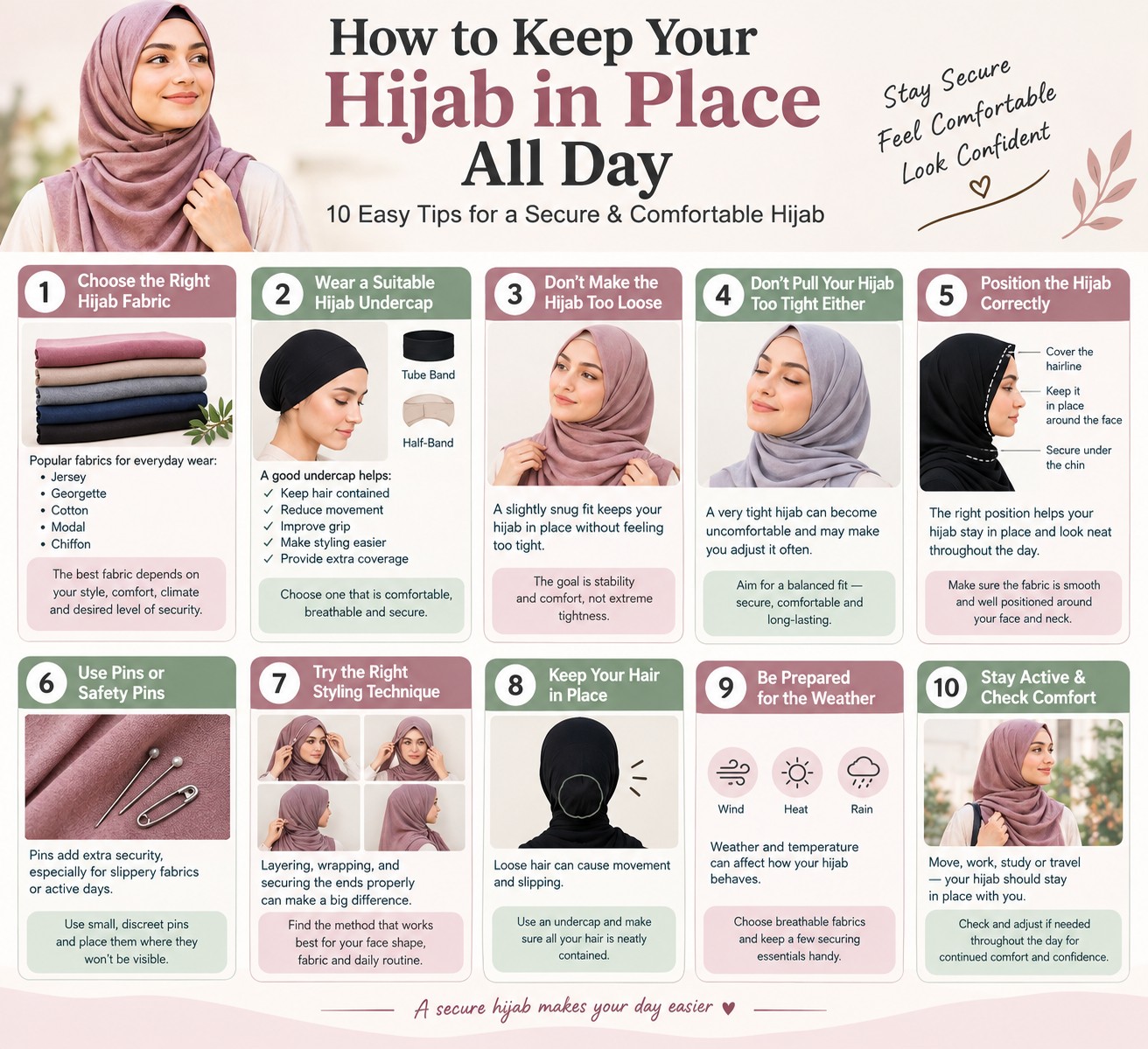
1. Choose the Right Hijab Fabric
Hijab fabric makes a major difference in how securely your hijab stays in place.
Some materials naturally provide more grip, while others are smooth and may move more easily.
For example, textured fabrics can sometimes be easier to manage than very smooth fabrics.
Popular hijab fabrics for everyday wear include:
- Jersey
- Georgette
- Cotton
- Modal
- Chiffon
This doesn’t mean one fabric is automatically better than another.
Chiffon hijabs, for example, can create a beautiful flowing look but may require more securing.
Georgette hijabs can provide useful texture while maintaining an elegant drape.
Jersey hijabs can be convenient because of their stretch and are often suitable for casual, everyday hijab styles.
The best hijab material depends on the style, comfort, climate and level of security you want.
For more information about choosing everyday hijab fabrics, read our guide on the best hijab fabrics for everyday wear.
2. Wear a Suitable Hijab Undercap
A good hijab undercap can provide a stable foundation for your hijab.
It can help:
- Keep hair contained
- Reduce movement
- Improve grip
- Make hijab styling easier
- Provide additional coverage
An undercap can be especially helpful when wearing smoother hijab fabrics, such as some types of chiffon.
However, not every undercap works equally well for everyone.
Choose one that feels secure without being unnecessarily tight or uncomfortable.
Tube Bands and Half-Band Undercaps
Tube bands and half-band undercaps can be practical options for creating a foundation underneath your hijab.
They can help hold the hair in place while providing a surface for the hijab to sit against.
For everyday wear, look for an undercap that is:
- Comfortable
- Breathable
- Flexible
- Secure
- Suitable for extended wear
A suitable hijab inner cap can make everyday hijab styling easier, particularly when you want a neat and stable look.
You can visit the Fashion Essentials shop to explore our modest fashion essentials.
3. Don’t Make the Hijab Too Loose
A very loose hijab can move easily.
After placing the hijab around your face, make sure it is comfortably positioned.
The goal isn’t to make the wrap extremely tight.
Instead, create a secure hijab fit while leaving enough room for comfortable movement.
A hijab should feel stable without causing unnecessary pressure.
For an everyday hijab style, a balanced fit is usually more practical than repeatedly adjusting a loose wrap throughout the day.
4. Don’t Pull Your Hijab Too Tight Either
The opposite problem can also occur.
A very tight hijab wrap may initially feel secure, but it can become uncomfortable after several hours.
It may also encourage you to keep adjusting the hijab throughout the day.
Aim for a balanced fit.
Your hijab should stay where you place it while still feeling comfortable.
Comfort is an important part of a practical modest fashion wardrobe, especially when you wear your hijab for work, university, travel or daily activities.
5. Position the Hijab Correctly
Small positioning mistakes can cause repeated hijab slipping.
Before securing the hijab, check:
- Is the front positioned evenly?
- Is enough fabric covering the desired area?
- Is the undercap positioned correctly?
- Is the fabric sitting comfortably around your face?
- Are both sides balanced for the style you’re creating?
Taking a few seconds at the beginning can prevent repeated adjustments later.
Correct positioning is particularly important when creating simple hijab styles for beginners.
6. Use Hijab Pins When Necessary
Hijab pins remain a simple and practical way to secure a hijab.
Depending on your preferred style, you can use a pin underneath the chin or in another discreet location.
However, avoid using unnecessary pins.
Too many pins can make the hijab uncomfortable and may create unwanted tension in delicate fabrics.
Use the minimum securing method that works for you.
The best hijab styling technique is one that provides enough security without making your everyday hijab uncomfortable.
7. Try Hijab Magnets
Hijab magnets can provide another way to secure fabric without making visible pin holes.
They can be useful for delicate fabrics and certain hijab wrapping styles.
However, use them appropriately and make sure they are secure.
Different fabrics and hijab styles may require different securing techniques.
If you enjoy lightweight and delicate hijabs, choosing an appropriate securing method can help maintain the appearance of the fabric while keeping your hijab in place.
8. Avoid Excessive Fabric Around the Face
More fabric isn’t always better.
If you create too many layers around your face, the weight and movement of the fabric can make the hijab harder to manage.
Try a simpler hijab wrap first.
Once you have the basic shape secure, add only the amount of draping you actually need.
This can create a cleaner, more comfortable and more stable appearance.
A simple everyday hijab style can often be easier to maintain than a complicated wrap with many loose layers.
9. Consider Your Hairstyle
Your hairstyle underneath the hijab can affect how the fabric sits.
Very smooth hair can sometimes make certain hijab fabrics move more easily.
A suitable undercap can help create a more stable foundation.
Avoid creating unnecessarily bulky hair arrangements underneath the hijab.
A flatter, comfortable base can make hijab styling easier and help improve the overall fit.
10. Adjust Your Hijab for the Weather
Weather can affect hijab stability and comfort.
Wind can move loose fabric, while heat and humidity can affect comfort and how certain hijab materials behave.
For windy conditions, consider:
- A more secure hijab wrapping style
- An appropriate undercap
- Fewer loose layers
- Suitable securing methods
For hot weather, focus on lightweight hijab fabrics and breathable layers.
Your choice of hijab material should match the weather and your daily routine.
How to Keep a Chiffon Hijab From Slipping
Chiffon hijabs can be particularly elegant, but some versions are smooth.
If your chiffon hijab keeps slipping, try:
- Wearing a suitable undercap.
- Creating a secure base around the head.
- Using a discreet pin or magnet.
- Avoiding excessive loose layers.
- Choosing a chiffon with a little more texture if available.
You don’t have to stop wearing chiffon simply because it moves.
A few adjustments can make a chiffon hijab much easier to manage while maintaining its lightweight, elegant appearance.
How to Keep a Georgette Hijab in Place
Georgette hijabs often have more texture than very smooth fabrics, which can make some versions easier to manage.
For a secure georgette style:
- Start with a comfortable undercap if needed.
- Position the hijab carefully.
- Secure it according to your preferred style.
- Avoid excessive fabric around the face.
- Adjust the drape after securing the main wrap.
A simple style can often be more stable than a complicated one.
Georgette can also be a useful choice when you want a balance between hijab comfort, texture and elegant drape.
How to Keep a Jersey Hijab in Place
Jersey hijabs are naturally stretchy, which can make them convenient for everyday wear.
However, don’t assume that every jersey hijab will stay in exactly the same position.
If it moves:
- Check the fit.
- Avoid making the wrap unnecessarily loose.
- Use an undercap if needed.
- Simplify the styling.
- Make sure the fabric isn’t being pulled unevenly.
Because jersey is often easy to style, it can be a practical option for comfortable everyday hijab styles.
What Is the Best Undercap for a Hijab?
The best hijab undercap depends on your hijab fabric, hairstyle, climate, and personal preference.
When choosing one, consider:
Comfort
You may wear it for several hours, so comfort matters.
Breathability
For warm weather, a breathable design can be more comfortable.
Grip
The undercap should provide a useful foundation without feeling excessively tight.
Coverage
Choose a style that provides the amount of hair coverage you prefer.
Flexibility
A flexible undercap can work with different hijab styles and everyday outfits.
A good hijab inner cap should support your styling without becoming a source of discomfort.
How to Keep Your Hijab in Place Without Pins
You can sometimes achieve a secure hijab without pins.
Try:
- A suitable undercap
- A textured hijab
- A simple wrapping technique
- A secure fit
- Hijab magnets
- A stretchy fabric such as jersey
However, whether a pinless hijab style works depends heavily on the fabric and your individual head shape and hair type.
Experiment with different hijab fabrics and styling techniques to find the combination that works best for your everyday routine.
How to Keep Your Hijab in Place in Wind
Wind can be particularly challenging when wearing a loose draped hijab style.
Before going outside:
- Secure the foundation.
- Keep the fabric around your face stable.
- Reduce unnecessary loose layers.
- Secure longer sections appropriately.
- Check the hijab before leaving.
A more structured hijab style may be more practical on particularly windy days.
If you regularly spend time outdoors, choosing a fabric with more grip can also make your everyday hijab easier to manage.
How to Stop Your Hijab From Moving at the Back
If the hijab keeps moving around the back of your head, check the foundation underneath it.
An undercap for hijab can help create a more stable surface.
You can also:
- Adjust the position of the hijab.
- Reduce excess fabric.
- Use an appropriate securing method.
- Choose a fabric with more grip.
- Simplify the wrapping style.
If the problem happens repeatedly, experiment with different hijab fabric types.
How to Make Your Hijab More Comfortable
Security isn’t the only goal.
A hijab that stays perfectly still but feels uncomfortable isn’t a good solution.
For better everyday hijab comfort:
- Don’t wrap too tightly.
- Choose suitable fabric.
- Use a comfortable undercap.
- Avoid excessive layers.
- Select a style that suits your routine.
- Take your climate into account.
The best everyday hijab is one that you can comfortably wear for hours without constantly thinking about it.
Comfort, coverage and style should work together as part of your modest fashion wardrobe.
Common Hijab Styling Mistakes
Using Too Many Pins
More pins don’t automatically mean better security.
Use only the amount of securing you actually need.
Choosing a Fabric Without Considering Your Style
A fabric that works beautifully for one person may not work the same way for another.
Think about your preferred hijab styles, comfort and daily activities before choosing a fabric.
Ignoring the Undercap
The right foundation can make hijab styling much easier.
Making the Hijab Too Tight
Security shouldn’t come at the expense of comfort.
Creating Too Many Layers
Excess fabric can add weight and movement.
Ignoring the Weather
Wind, heat and humidity can significantly affect how your hijab behaves.
A Simple Secure Hijab Routine
If you’re a beginner, try this basic secure hijab routine:
Step 1: Choose a suitable hijab fabric.
Step 2: Put on a comfortable undercap if needed.
Step 3: Position the hijab around your face.
Step 4: Secure the main wrap.
Step 5: Arrange the longer side over your shoulder.
Step 6: Check the front and sides.
Step 7: Make small adjustments.
That’s it.
You don’t need a complicated technique to create a secure everyday hijab.
Start with a comfortable foundation, choose a suitable fabric, and keep your styling simple.
For more hijab styling ideas and modest fashion guides, visit the Fashion Essentials Blog.
Frequently Asked Questions
How do I keep my hijab from slipping?
Choose a suitable hijab fabric, use a comfortable undercap, position the hijab correctly, and use a securing method appropriate for the fabric and style.
Why does my hijab keep sliding backward?
This can happen because of a slippery fabric, smooth hair, an unsuitable undercap, or an overly loose wrap. Adjusting the foundation can often help.
How do I keep a chiffon hijab in place?
A suitable undercap, careful positioning, and a discreet pin or magnet can help secure chiffon. Avoid unnecessarily loose layers.
Do hijab undercaps help?
Yes. An undercap can provide a stable foundation and may help reduce movement, especially with smooth fabrics.
Can I wear a hijab without pins?
Yes. Some fabrics and styles can be worn without traditional pins. Jersey, textured fabrics, suitable undercaps, and magnets can be useful alternatives.
Why does my hijab move in the wind?
Loose draping and smooth fabrics can be more affected by wind. A secure foundation and simpler wrapping style can help.
Should a hijab be tight?
No. Your hijab should be secure but comfortable. Avoid excessive tightness.
What is the best hijab fabric for staying in place?
There is no single best fabric for everyone. Textured fabrics such as some georgette fabrics or stretchy fabrics such as jersey may be easier for some people to manage, while chiffon may require additional securing.
Final Thoughts
Learning how to keep your hijab in place is mostly about finding the right combination of hijab fabric, foundation, fit and styling technique.
If your hijab keeps slipping, don’t immediately assume that you’re wrapping it incorrectly.
The problem may simply be the fabric or the lack of a suitable foundation underneath.
Experiment with different hijab materials, try a comfortable undercap, simplify your wrapping technique, and use pins or magnets when appropriate.
With a little practice, you can create a hijab style that stays secure while still looking natural and feeling comfortable throughout the day.
Fashion Essentials offers hijabs, undercaps, stoles and everyday modest-fashion essentials designed to help you create comfortable, practical looks for your daily wardrobe.